Leak detection
Reducing leakage means preserving a precious resource, improving network efficiency and optimising investment. ETS carries out leak detection on water supply networks using proven methods, advanced technologies and a results-driven approach.
From pinpointing individual leaks to structured leakage reduction programmes, we give water utilities reliable data and practical tools to improve network performance and plan effective interventions.
Systematic detection
Structured programmes to reduce leakage
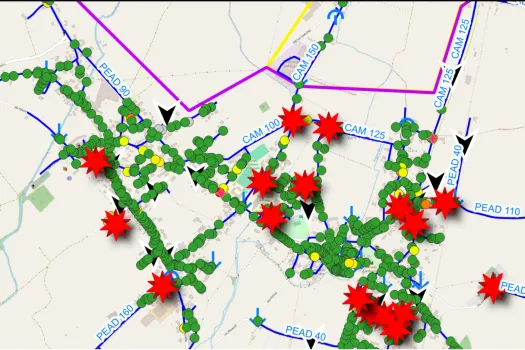
Systematic leak detection is a planned, ongoing activity aimed at reducing real losses from the water supply network. ETS organises complete detection campaigns across districts or sections of the network, following defined programmes that make it possible to identify and locate existing leaks.
Combining several technologies lets us adapt our methods to the specific characteristics of each network, locating leaks more accurately and progressively improving the performance of the water supply system.
Activities
- Scheduled leak detection
- District campaigns
- Leak location
- Support for repair work
- Post-repair verification
- Technical reporting
Target-driven detection
A method driven by measurable results
Target-driven detection pairs leak location with continuous analysis of network performance. The aim is not only to find leaks but to measure, in concrete terms, the improvement achieved through detection and repair.
The starting point is analysis of the Minimum Night Flow (MNF), the key indicator for assessing the level of real losses and estimating how much can be recovered. During the work we monitor network indicators, comparing values before and after detection and repair to quantify the actual reduction in leakage and the benefits achieved.
This approach gives utilities objective data to assess how effective the work has been, guiding the planning of further interventions and the optimisation of investment.
Benefits
- Network performance assessment
- Minimum Night Flow (MNF) analysis
- Estimate of recoverable losses
- Monitoring of results
- Measurement of leakage reduction
- Support for management decisions
Innovative detection / advanced diagnostics
Specialist technologies for the most complex situations
Not every leak can be found with the same method: each network has its own operating conditions, materials and critical issues. In the most complex settings we select, case by case, the most effective diagnostic technology for the situation.
Combining proven tools with the latest systems increases the accuracy of surveys, cuts detection times and makes it possible to work even in the most difficult conditions.
Acoustic listening - listening stick and geophone
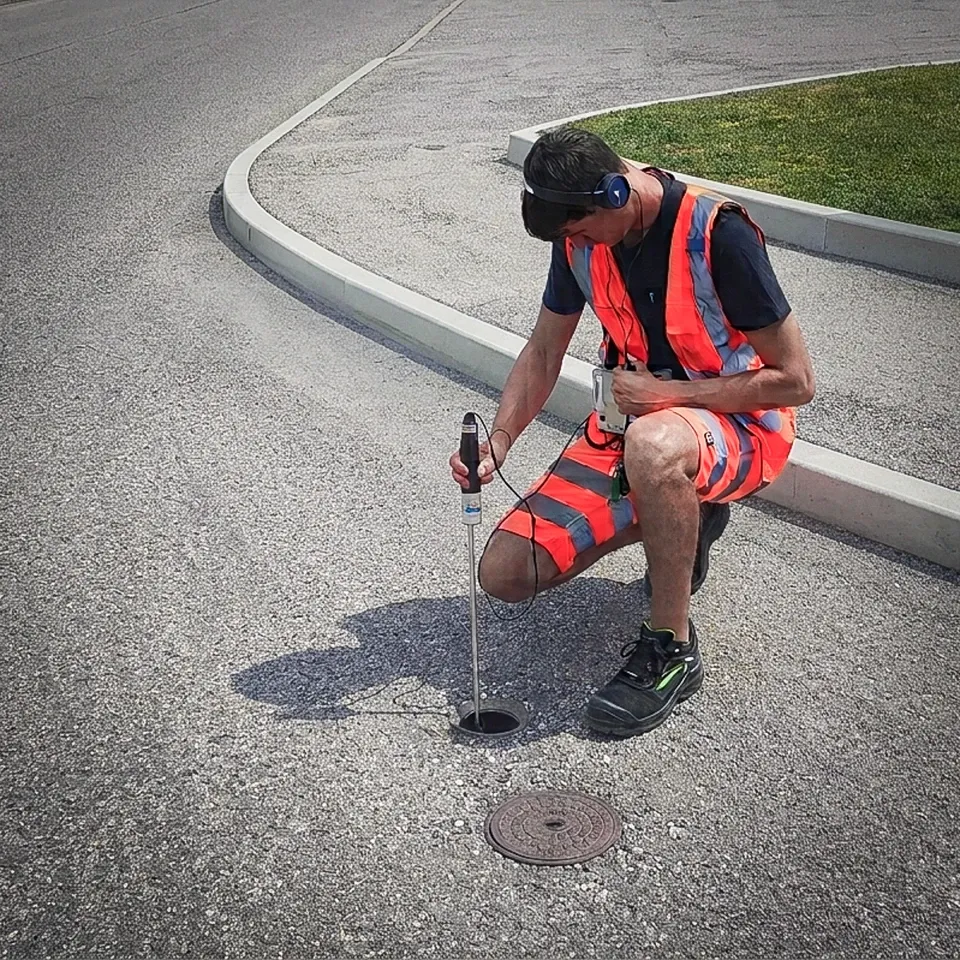
Acoustic listening is the basic method for locating leaks. Listening sticks and geophones pick up the noise made by escaping water and pinpoint the leak accurately, even on large or complex networks.
Correlation
Sensors installed on the network analyse how long the noise generated by the leak takes to travel: processing the signals determines its position with high accuracy, an effective method on long or hard-to-reach pipes.
Tracer gas
When network conditions require it, tracer gas finds leaks that acoustic techniques alone cannot detect. A harmless gas mixture is introduced into the pipe and the point where it escapes is then located with dedicated detection equipment.
In-line sphere
The in-line sphere inspects pipes from the inside while the network stays in normal operation. Sensors in the sphere record the acoustic anomalies caused by leaks, locating them even on large trunk mains and supply mains.
Drone with thermal camera
Drones equipped with thermal cameras can quickly survey large areas and identify thermal anomalies that may point to water leaks. This technology is particularly useful in preliminary surveys and in inspections of hard-to-reach infrastructure.
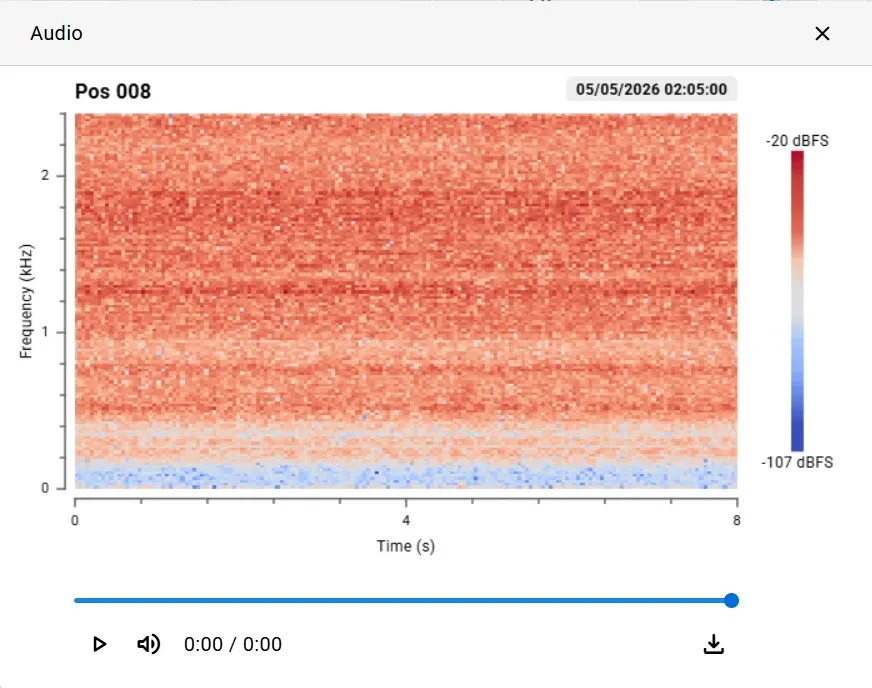
Noise loggers and hydrophones
Noise loggers and hydrophones monitor the acoustic behaviour of the network over time, permanently or temporarily, recording the acoustic signals produced by leaks. This helps detect anomalies early and plan detection work.
Closures and step tests
Closure tests and step tests divide the network into controlled sections, analysing changes in flow and pressure to progressively narrow the search area. An effective method on district-metered networks when the affected stretch has to be found quickly.
Fibre optics - distributed monitoring along the pipe
Among the most advanced solutions for continuous monitoring of water networks. Sensors distributed along the pipe detect acoustic and vibration changes associated with leaks, flagging anomalies promptly even on very long infrastructure.
This technology is particularly suited to strategic networks, large supply mains and hard-to-reach pipes, where continuous monitoring shortens the time needed to find leaks, improves survey accuracy and makes managing the infrastructure more efficient and proactive.
The ETS method
Network analysis
Study of the available data, districts and performance indicators.
Strategy definition
Selection of the most suitable methods and technologies.
Field detection
Locating leaks with integrated techniques.
Repair support
Assistance with checks and validation of repairs.
Measuring results
Comparison of network indicators, such as Minimum Night Flow, before and after repairs, to quantify the leakage recovered and the performance gained.